
Skip to content
Home Support Status Legal Account Game Panel
ProRedLine Support
  • Docs
  • My Tickets

Old Categories

122
  • Legacy ProRedLine App – Discontinuation Notice
  • What is a prepaid model?
  • Does the System Retry Failed Payments?
  • Can I Avoid the Reactivation Fee?
  • Why a Reactivation Fee Exists
  • What happens if I don’t renew on time?
  • How renewal reminders work
  • How to Update Your Payment Method
  • How to renew/cancel a subscription
  • My Server Won’t Start
  • Error Connecting to Server
  • Email Notifications Not Arriving
  • Our websites and Their Purpose
  • Performance Issues on My Server
  • How to Request a Plan Change
  • Reporting Incidents
  • WordPress Add-ons Availability
  • Payment Rules for Plan Changes
  • Changing Your Billing Cycle (30 -> 90 days, etc.)
  • Downgrade Requests (Less Resources or Lower Plan)
  • Upgrade Requests (More Resources or Features)
  • Calendars and Contacts in cPanel
  • Forwarders and Autoresponders Explained
  • Spam Filters in cPanel Explained
  • Email Accounts in cPanel Explained
  • DNS Changes and Propagation Time
  • Using a Domain with Web Hosting
  • Custom Error Pages in cPanel
  • Cron Jobs Explained
  • Logging In to Webmail for the First Time
  • Domain Parking vs Addon Domains Explained
  • Using a Domain with External Providers
  • Using a Domain with Email Hosting
  • Using Your Domain with Web Hosting
  • DNS Propagation and Email Delays
  • SPF, DKIM and DMARC Explained
  • MX Records Explained
  • Using Email Hosting with Your Domain
  • Mobile Email Setup (iOS and Android)
  • Setting Up Email in Outlook, Apple Mail and Thunderbird
  • Creating Your First Email Account
  • Apache Handlers Explained
  • Indexes and MIME Types Explained
  • Optimize Website Explained
  • Site Publisher Explained
  • Updating WordPress Core, Plugins and Themes
  • Understanding Users, Roles and Permissions in WordPress
  • First Steps After Installing WordPress
  • Installing WordPress Using WP Toolkit
  • WordPress and Hosting Responsibilities Explained
  • What WordPress Is (and Is Not) Suitable For
  • Recommended WordPress Security Plugins (Personal Advice)
  • Common Causes of a Slow WordPress Website
  • Image Optimization Basics for WordPress
  • Caching Explained for WordPress
  • PHP Versions and WordPress Compatibility
  • Staging Explained in WP Toolkit
  • Cloning a WordPress Website
  • Security policy update: change your email password
  • WordPress White Screen Explained
  • Common WordPress Security Mistakes
  • Account Management
    • Legacy ProRedLine App – Discontinuation Notice
  • Security & Trust
    • Security policy update: change your email password
  • Troubleshooting
    • My Server Won’t Start
    • Error Connecting to Server
    • Email Notifications Not Arriving
    • Performance Issues on My Server
  • Platform & Tools
    • Reporting Incidents
    • Our websites and Their Purpose
  • Payments & Billing
    • Failed payments & retry logic
      • Does the System Retry Failed Payments?
      • How to Update Your Payment Method
    • Reactivation fee explained
      • Can I Avoid the Reactivation Fee?
      • Why a Reactivation Fee Exists
    • Prepaid model explained
      • How renewal reminders work
      • What happens if I don’t renew on time?
      • How to renew/cancel a subscription
      • What is a prepaid model?
    • Switching Plans (Consumer)
      • How to Request a Plan Change
      • Upgrade Requests (More Resources or Features)
      • Downgrade Requests (Less Resources or Lower Plan)
      • Changing Your Billing Cycle (30 -> 90 days, etc.)
      • Payment Rules for Plan Changes
  • Web Hosting
    • Domains & DNS
      • Using Your Domain with Web Hosting
    • Website Management
      • Optimize Website Explained
      • Site Publisher Explained
    • Advanced
      • Apache Handlers Explained
      • Indexes and MIME Types Explained
  • Email Hosting
    • Getting Started
      • Mobile Email Setup (iOS and Android)
      • Setting Up Email in Outlook, Apple Mail and Thunderbird
      • Creating Your First Email Account
      • Logging In to Webmail for the First Time
    • DNS & Deliverability
      • DNS Propagation and Email Delays
      • SPF, DKIM and DMARC Explained
      • MX Records Explained
      • Using Email Hosting with Your Domain
  • cPanel
    • cPanel Domains & DNS
      • DNS Changes and Propagation Time
    • cPanel Email
      • Calendars and Contacts in cPanel
      • Forwarders and Autoresponders Explained
      • Spam Filters in cPanel Explained
      • Email Accounts in cPanel Explained
    • Security & Advanced
      • Custom Error Pages in cPanel
      • Cron Jobs Explained
  • Domains & DNS
    • Use Cases
      • Domain Parking vs Addon Domains Explained
      • Using a Domain with External Providers
      • Using a Domain with Email Hosting
      • Using a Domain with Web Hosting
  • WordPress
    • Overview
      • WordPress and Hosting Responsibilities Explained
      • What WordPress Is (and Is Not) Suitable For
    • Getting Started
      • Understanding Users, Roles and Permissions in WordPress
      • First Steps After Installing WordPress
      • Installing WordPress Using WP Toolkit
    • WP Toolkit
      • Staging Explained in WP Toolkit
      • Cloning a WordPress Website
      • Updating WordPress Core, Plugins and Themes
    • Performance
      • Common Causes of a Slow WordPress Website
      • Image Optimization Basics for WordPress
      • Caching Explained for WordPress
      • PHP Versions and WordPress Compatibility
    • Security
      • Common WordPress Security Mistakes
      • Recommended WordPress Security Plugins (Personal Advice)
    • Troubleshooting
      • WordPress Add-ons Availability
      • WordPress White Screen Explained

New Docs

55
  • Finished New Docs
    • Invoices and Billing Documents
    • Payments and Billing Basics
    • Common WordPress Problems
    • WordPress Security Basics
    • Managing WordPress with WP Toolkit
    • What is WordPress
    • Suspension vs Closure
    • Closing your Account and Data Requests
    • Account Suspension Explained
    • Account Security Basics
    • Password Resets & Access Issues
    • Managing Additional User Access
    • Managing Your Account Details
    • Domain Transfers and Authorization Codes
    • Domain Ownership and Responsibilities
    • Managing Domains and DNS
    • Domain and DNS Basics
    • Common Email Problems
    • Managing Email Features
    • Email Deliverability and Authentication
    • What is Email Hosting?
    • PHP Settings in Web Hosting
    • Databases for Web Hosting
    • Managing your Website
    • What is Web Hosting?
    • Security Features in cPanel
    • Databases in cPanel
    • Backups in cPanel
    • File management Tools
    • Why some cPanel features are disabled
    • What is cPanel and how does it work
    • Backups and Restores
    • Creating Scheduled Tasks
    • Using the File Manager
    • Getting Started with the Game Panel
    • Visual Studio Code
    • Uptime Kuma
    • LanguageTool
    • Discord Bot
    • BeamMP
    • Ark Survival Evolved
    • Unturned
    • Satisfactory
    • Rust
    • Minecraft Bedrock
    • Minecraft Java
    • Insurgency
    • Euro Truck Simulator 2
    • Ark Survival Ascended
  • Unfinished New Docs
    • WordPress
    • cPanel
    • Email
    • Web Hosting
    • App Servers
    • Game Servers
View Categories
  • Docs
  • New Docs
  • Finished New Docs
  • Backups and Restores

Backups and Restores

ProRedLine
Updated on March 30, 2026

3 min read

AI Doc Summarizer Doc Summary
AI Doc Summarizer Thinking Thinking

Introduction #

Creating backups is a crucial thing for server hosting. Got hacked? > Restore backup. Misconfigured something? > Restore backup. You probably get it now, but therefore you will find information about creating (automatic) backups and restoring them in this doc.


Manually Creating Backups #

Creating manual backups is recommended to make use of before you edit any files or settings of your server. This is how:

  1. On your server’s dashboard, go to the ‘Backups’ tab.
  2. There you will find a blue button on the right bottom corner labelled ‘CREATE BACKUP’, click on this button.
  3. A popup will show. First, optionally give the backup a name for internal reference.
  4. Optionally enter files and/or directories you don’t want to backup. If this field is left empty, it means all files and directories will be backed up.
  5. Optionally select if you want this backup to be locked. This prevents deletion of the backup until it’s manually unlocked again. This can come in handy if you also use the automatic backups feature, but don’t want this manual backup to be overwritten/deleted.
  6. Click on the ‘START BACKUP’ button on the bottom right of the popup.
  7. The backup is now being created. Backup times depend on the total size of your files and directories.

Automatic Backups #

Note: This section does not cover how to create schedules & tasks. Instead, this section focuses on what happens behind the scenes when your scheduler creates backups, and how backup limits are handled. Please read the following article on more information on schedules & tasks:

  • https://support.proredline.com/docs/creating-scheduled-tasks/

What Does the Automatic Backup Task Do? #

When you add a “Create backup” action to a scheduled task in the Game Panel of your server, the following process occurs:

  1. At the configured time, the scheduler triggers the task (if the schedule is enabled and conditions such as “Only When Server Is Online” are met).
  2. The system creates a complete snapshot of your server’s data (files, configuration, and other relevant content), unless you’ve specified exclusions in the Ignored Files field.
  3. The new backup is stored until manually or automatically deleted.
  4. If your server has reached its backup limit, the oldest backup is automatically deleted to make room for the new one. This ensures that your backup storage remains within its allocated space.
  5. Once the process completes, the latest backup appears in your server’s Backups tab and can be used for restore at any time.

How It Works (Technical Overview) #

When the Task Scheduler runs a backup task:

  1. It checks the server’s current number of existing backups.
  2. It compares that number with the maximum backup limit defined for the server.
    • If the number equals or exceeds the limit: the oldest backup is deleted first.
    • If not: the backup is created immediately.
  3. The new backup is then stored and indexed in the Game Panel for restore or manual download.

Each backup action may also include:

  • Time Offset (seconds): Defines a delay when multiple tasks exist in the same schedule.
  • Ignored Files: Lets you skip files or directories from the backup.
  • Continue on Failure: Determines if the schedule should continue even if this task fails.

Best Practices #

  • Backup Frequency: Choose a schedule appropriate for your server’s activity level (e.g., every 24 hours for active game servers).
  • Exclude Unnecessary Data: Use Ignored Files to skip logs, caches, or temporary files.
  • Test Restores: Regularly test restoring a backup to ensure reliability.

Automatic backups created through the Task Scheduler provide a reliable, self-maintaining data protection mechanism.
By automatically removing the oldest backup when the limit is reached, your server stays both safe and optimized for storage efficiency.
With the right scheduling frequency and retention policy, you can ensure that your data is always recoverable without manual cleanup or intervention.


Restoring from Backup #

Restoring a backup allows you to revert your server to a previous state in case of data loss, corruption, or configuration errors. All restore actions are performed directly inside the server’s Backups tab.

Where to Find Your Backups #

  1. Open your server in the Game Panel.
  2. Navigate to the Backups tab in the navigation bar.
  3. You will see a list of all available backups, each showing the date and time of creation.
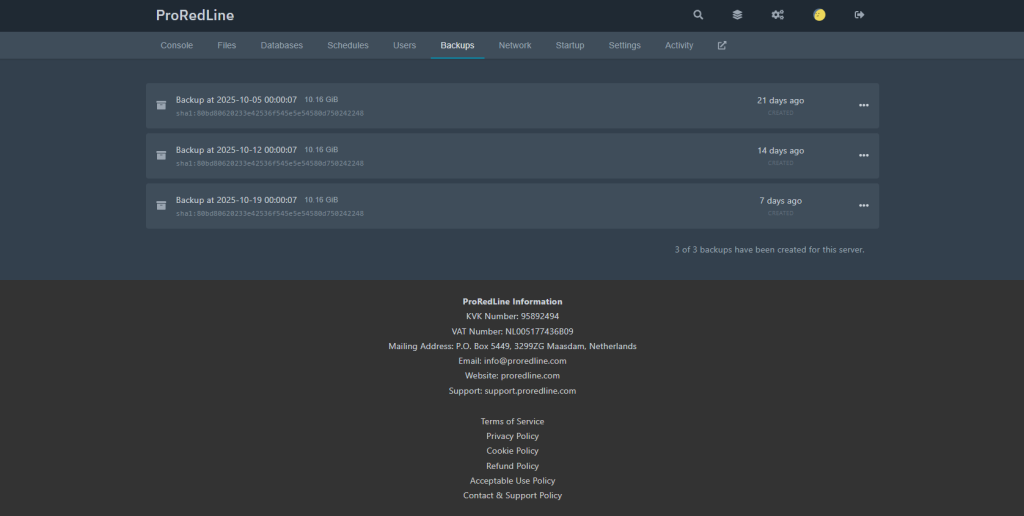
How to Restore a Backup #

  1. Locate the backup you want to restore.
  2. Click on the three dots (⋮) next to it.
  3. Select Restore from the dropdown menu.
  4. A confirmation window will appear with the following message:
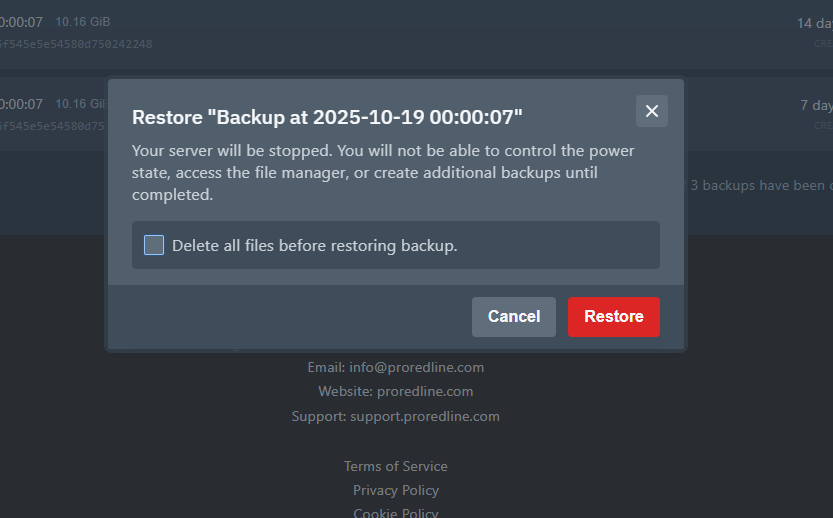
  1. The popup gives you an option to “Delete all files before restoring backup.” It is strongly recommended to enable this option. This ensures that no old or conflicting files remain on the server, providing a clean restore environment.
  2. Click Restore to start the process. The server will automatically shut down during the restoration. Additionally while restoring, you cannot start, stop, or access the file manager.
  3. Open the Console tab to see live progress of the restoration. The Game Panel Console will display messages showing which files are being restored.
  4. After the restoration is complete, your server can be started again normally. All files from the selected backup are now active and your environment has been fully reverted to that point in time.

Still need help after reading this article?

Create a Ticket
What is cPanel and how does it workCreating Scheduled Tasks
Table of Contents
  • Introduction
  • Manually Creating Backups
  • Automatic Backups
    • What Does the Automatic Backup Task Do?
    • How It Works (Technical Overview)
    • Best Practices
  • Restoring from Backup
    • Where to Find Your Backups
    • How to Restore a Backup

Share This Article:

  • Facebook
  • X
  • LinkedIn
  • Pinterest

Was it helpful?

  • Happy
  • Normal
  • Sad
ProRedLine

Reliable EU-based hosting for web, game and app services, built with clarity, performance and personal support in mind.

Hosting

  • Web Hosting
  • Game Servers
  • App Servers
  • Status
  • Support

Company

  • About Us
  • News
  • Information
  • Game Panel

Legal

  • Terms of Service
  • Privacy Policy
  • Acceptable Use Policy
  • Cookie Policy
  • Contact & Support Policy

Contact

info@proredline.com

P.O. Box 5449
3299 ZG, Maasdam
Netherlands

Stay updated

Receive occasional ProRedLine updates by email.

Subscribe to newsletter »

© 2025 - 2026 ProRedLine. All rights reserved.

KVK: 95892494 VAT: NL005177436B09
  • Docs
  • My Tickets
Type your search
Loading...

Insert/edit link

Enter the destination URL

Or link to existing content

    No search term specified. Showing recent items. Search or use up and down arrow keys to select an item.